Inka Roca
Institutional adaptation in the face of sustained growth
Every institution is born to respond to a concrete reality; when that reality changes, preserving the structure intact can become another form of disorder. Adapting does not mean denying tradition, but allowing it to continue fulfilling a function. Inka Roca explains to CondorSoul that Cuzco grew and that the old forms of authority were no longer sufficient to organize a more complex society.
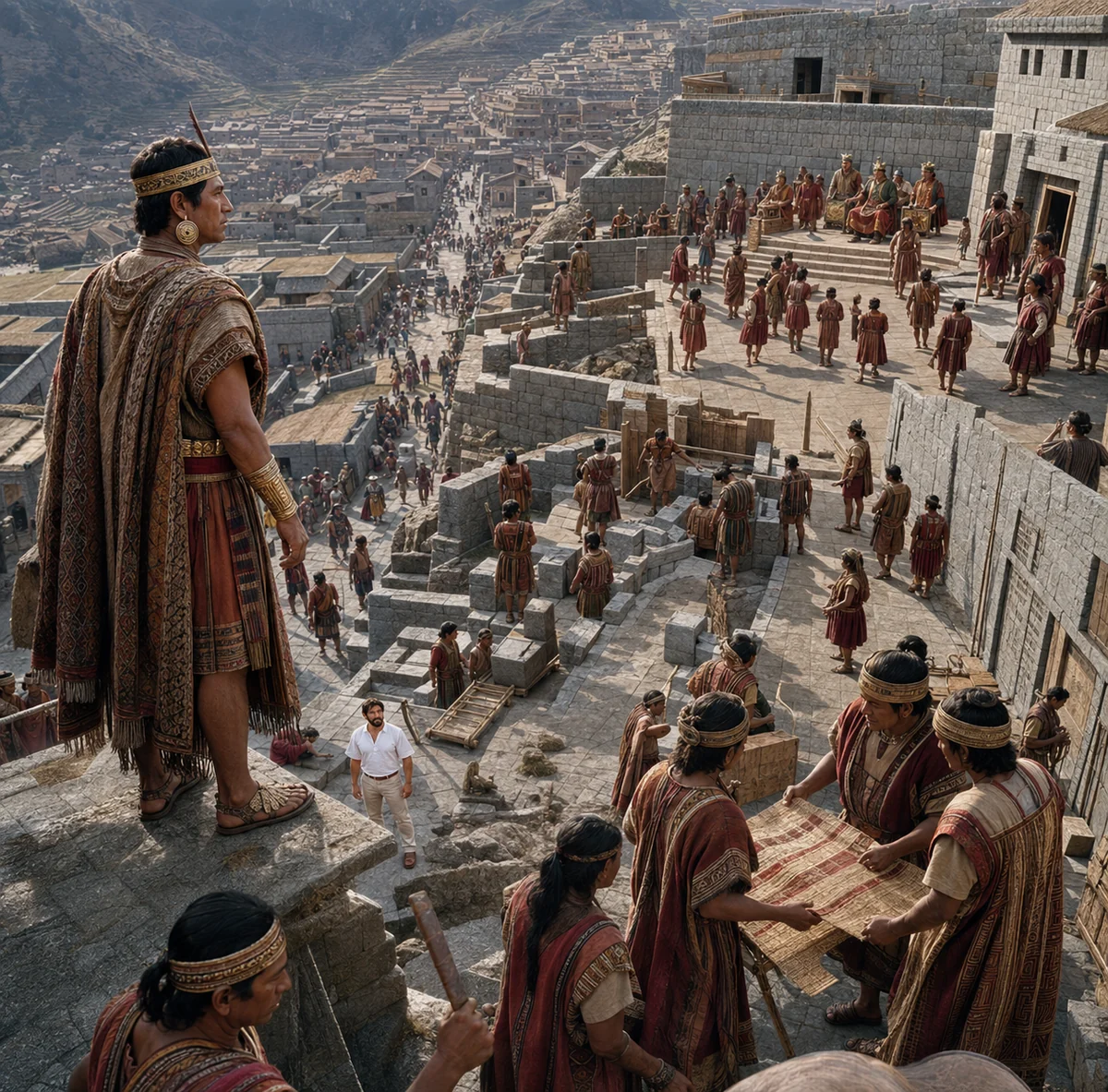
The sixth Inka states that he brought together in a single figure political and military responsibilities that had previously been divided between curacas and sinches. At the same time, he moved the center of his dynasty toward Hanan Cuzco and left Urin with a function more closely linked to the religious sphere. The city began to physically express a new organization.
The scene shows that institutions are not immovable structures. They are born to respond to certain needs and lose effectiveness when reality changes. An authority that does not adapt ends up governing a world that no longer exists; one that transforms itself without limits can break the continuity that gives it legitimacy.
CondorSoul discovers in that reorganization a decisive stage of the Inca process. Each ruler receives an order and modifies it according to his problems. Inka Roca does not simply inherit a structure: he reinterprets it.
To adapt is to preserve the purpose of an institution even when the forms through which it tries to fulfill that purpose change, without losing its meaning, legitimacy, continuity, or commitment to the community.
Comments
Loading comments...